The Book of Sara
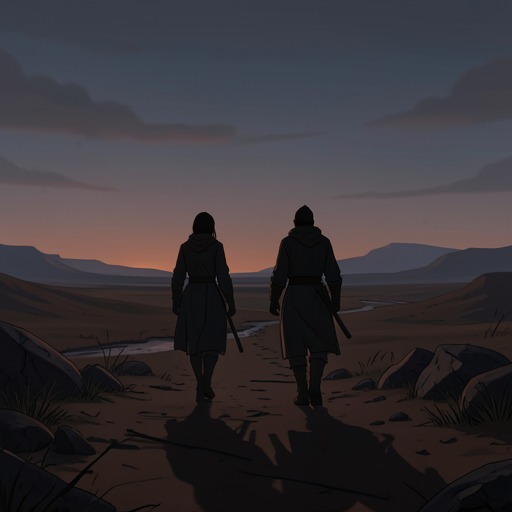
The Passage (Justin Cronin Edition)The Book of Sara is Sara Fisher’s journal, written during an eight-person expedition from the San Jacinto Mountains toward Telluride, Colorado. Its importance lies in its double purpose: it records immediate dangers and ordinary moments on the road, while making the travelers’ experiences available to readers who may come long after them.
A Record for an Unknown Reader
Presented as an excerpt from Sara Fisher’s journal at a conference on the North American Quarantine Period, the text locates the act of writing within the expedition itself. On Day 4, Sara identifies herself as a member of a First Family and writes from an army bunker north of Twentynine Palms, California. She explains that Peter Jaxon believes someone should keep a record of what happens to them, in case a future reader wants to know.
The journal’s intended audience is uncertain even to Sara: she addresses someone she does not know and cannot be sure is alive. That uncertainty gives the record its urgency. The travelers do not know whether they will reach Colorado or see home again, but the possibility that their story might be read gives their present experience a future beyond the journey.
The Expedition in Daily Detail
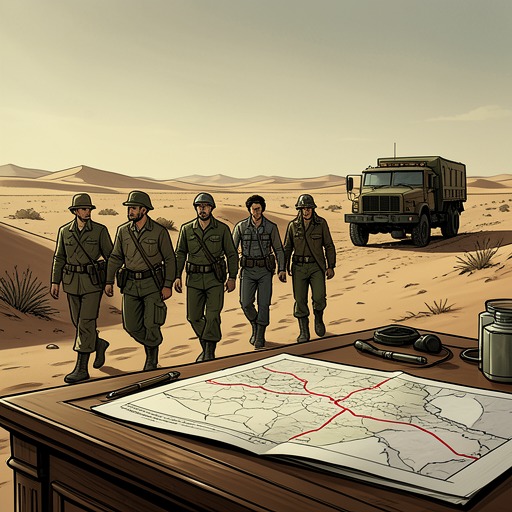
At the bunker, Sara describes practical preparations rather than grand expectations. The group has electricity, plumbing, and a working cold-water shower; the three principal chambers hold weapons, vehicles, and supplies. Michael Fisher and Caleb Jones try to repair a Humvee, while Alicia Donadio helps by passing them tools. These concrete details make the journal a record of how the expedition is assembled from salvaged resources and shared labor.
By Day 18, the party has reached Kelso, where the boarded-up depot offers little security and no water. Sara notes the lizards and large spiders, the exposure of the building, and the group’s dependence on what they carried. The following night, three infected enter through the roof. Two are killed and the third escapes; Hollis Wilson is wounded by a gunshot, though he and Alicia give different accounts of how it happened. With the travelers waiting for sunrise before setting out toward Las Vegas, the journal registers how quickly a stop for shelter can become another threat.
Yet danger does not make the record solely an account of fear. In the same entry, Sara says she would rather be on the road with these people than anywhere else. She recognizes that the group has become a family, and that fear feels different when it may amount to something. Her reflection turns the journal from a travel log into an account of a bond formed through shared uncertainty.
Memory Beyond Sara’s Journey
The book’s place in a wider practice of remembering is underscored by Auntie’s memory book. Her hand-stitched volume, wrapped in lambskin and filled with tiny writing in homemade ink, preserves the world before the catastrophe and the people who built lives afterward. She makes her own paper from boiled sawdust, and says she writes down the past because one day someone may want to know what happened in the Colony.
That work responds to the fragility of communal memory. Auntie recalls the First Ones, including people who have died or been transformed and whose names are no longer remembered. Her account preserves small customs from the Time Before as well as losses among the Colony’s early generations. The journal form of The Book of Sara belongs to the same larger need to leave a trace, though Sara writes amid events as they unfold, while Auntie reconstructs a lifetime of memories.
Form and Significance
Because Sara writes from within the expedition, the journal keeps the reader close to the limits of what the travelers know. It records provisional judgments, practical problems, and changing relationships without offering a complete view of the road ahead. Its entries preserve both the expedition’s exposed conditions and the ordinary exchanges that make continued travel possible.
The journal also gives historical meaning to the group’s movement. After years of waiting for the Army, Sara concludes that the Army is them. The realization reframes the expedition: the travelers are not simply awaiting rescue but carrying responsibility themselves. The Book of Sara preserves that shift alongside the day-to-day record, making the act of writing part of the group’s effort to understand what its journey means.